
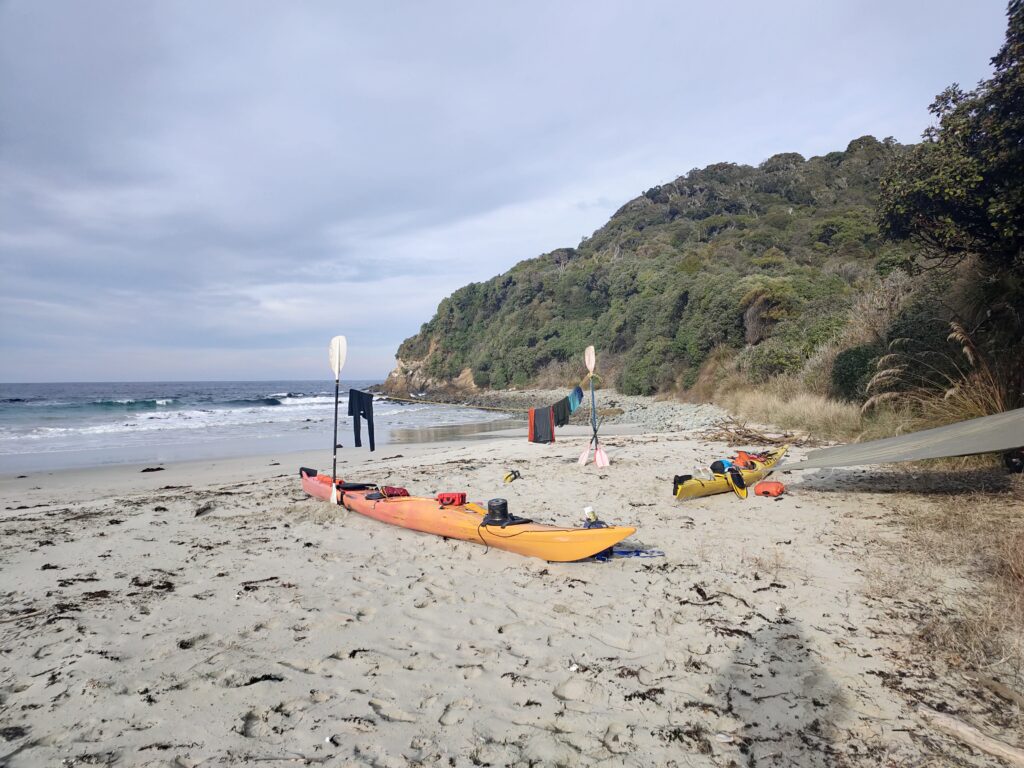
Stewart Island is one of the best sea kayaking expeditions out there. Big swell, exposed coastline, incredible scenery and enough boat traffic around to be relatively safe in case of emergency.
Planning
One of the parts of Stewart Island is that there is very little planning needed. When Harry and I attempted our circumnavigation, we had 2 weeks of planning before we set off. No permits needed, no navy to contact etc. The only thing you need to do is contact a lady called Meri who is in control of the fisherman radio channel. She is the lady who is in charge of everyone on the water in the area. She just likes to know your plan and experience before you head off and when you are planning on getting back etc. I won’t add her number on here for her privacy but if you are planning a Stewart Island expedition feel free to send me a dm on Instagram @iambrodyd or via email @brodyduncan@live.com and i can send through the details. She will also run you through all the details on radio channels and times etc.
You need to decide which way you are wanting to go around the island, clockwise or anticlockwise. The main thing to consider here is that the predominant winds in Nz are nw. This means that if you were to go anticlockwise you would have more of a chance of tail winds.
Transport
The easiest way to get to Stewart Island is to hop on one of the ferry services from Bluff. Stewart Island Ferry Service | Experience Rakiura This will bring you right into Oban – Stewart Island’s only town. Another option is a private charter boat from one of the local companies- this is mostly for if you want to do a trip that isn’t based out of Oban, for example Port Pegasus. And the final option is to kayak over, it is roughly 40km from bluff to Stewart Island. If you have a section of really nice weather, it is a nice way to do it. There are very little landing spots throughout the crossing and do not do it unless the weather is 100% staying calm for the full crossing.
What time of year?
As with most sea kayaking expeditions, the best time to go is winter. This is because it is normally when the seas are calmer and less wind. Making for a better trip all around. It is possible to do anytime of the year but just be wary that it does get extremely rough sometimes. I would also recommend not to go during the ‘roar’ which is when the hunters all flock to Stewart Island to go hunt deer. This is normally March to April.
Food
Another of the lovely things about Sewart Island is that the fishing is world class. You can rely on fishing for a decent portion of your meals. Blue cod is very common. If you are an experienced free diver, you take even more advantage of the fishing quality. There are also a decent number of deer on the island also, if you have your hunting licenses and are permitted to hunt in Nz this is also a good way to get food. Be aware a significant portion of the island is hunting blocks that get booked by hunters during certain times of the year so make sure you check that before leaving. Otherwise just pack lots of items to compliments the seafood and potentially deer. Lots of salt, lemon juice etc.
Huts vs camping
Stewart Island has plenty of backcountry huts littered along the coastline for hunters, fisherman and adventurers to use. You must have a backcountry hut pass to use the facilities which can be purchased through the department of conservation Backcountry Hut Pass: Stay in a hut. Camping is also an option if you want. The coastline is very rugger though, so it may be hard to find good spots. I would highly recommend the huts as there is nothing better than doing a big day on the water and arriving to a dry hut with a fireplace for the night. If you are planning on staying in the huts, please make sure to bring a shelter just in case you get caught out somewhere.
Sharks
Not to try and scare everyone off doing this expedition but it needs to be said just in case. Stewart Island is a hot spot for great white sharks. There are a few outfitters nearby that run great white shark cage diving tours. They are normally found around the island from July to November. We didn’t see any signs while we were doing our expedition, but the chance is always there.
Swell/tides
Stewart island has some potentially rough swells; we found this out firsthand on our expedition. Highly recommend staying in the sheltered bays to make sure it’s easy to get back into the open water easy the next morning – The 2 mornings we did not do this were by far the hardest to get out the next morning due to sharp swell with not time between sets. We found that the swell was very confused in the open sea, it may have just been the mix of swell and wind direction for us, but we had confused swell for the majority of the expedition. Tidal range is about 1.5m – 2.5m nothing crazy but good to know for if you need to camp. All of the huts are well beyond the tide lines.
Specialist gear for Stewart Island
- Free diving gear
- Hunting gear
- marine radio
- fishing gear (handline)
- Fire lighting kit
- rope for portages
- recommend not using merino as it does generally rip easily – Stewart Island scrub is harsh
- wool or polypropylene work well
- drysuit
- good rain jacket
- Well stocked repair kit
Overall, I highly recommend Stewart Island as an expedition, as long as you are experienced enough and ready for whatever it throws your way. The scenery and coastline are stunning the entire way. Fishing is world class, huts most of the way with plenty of little side missions if you are wanting them.
Brody is an expedition athlete and adventure content creator based in Wānaka, New Zealand. With six years guiding in Fiordland and multi‑week missions across Patagonia, Stewart Island, and soon Antarctica, he specializes in cold‑water, remote‑environment expeditions. Through Remote Horizons, he shares real‑world gear insights, expedition planning advice, and storytelling from some of the wildest coastlines on the planet.